
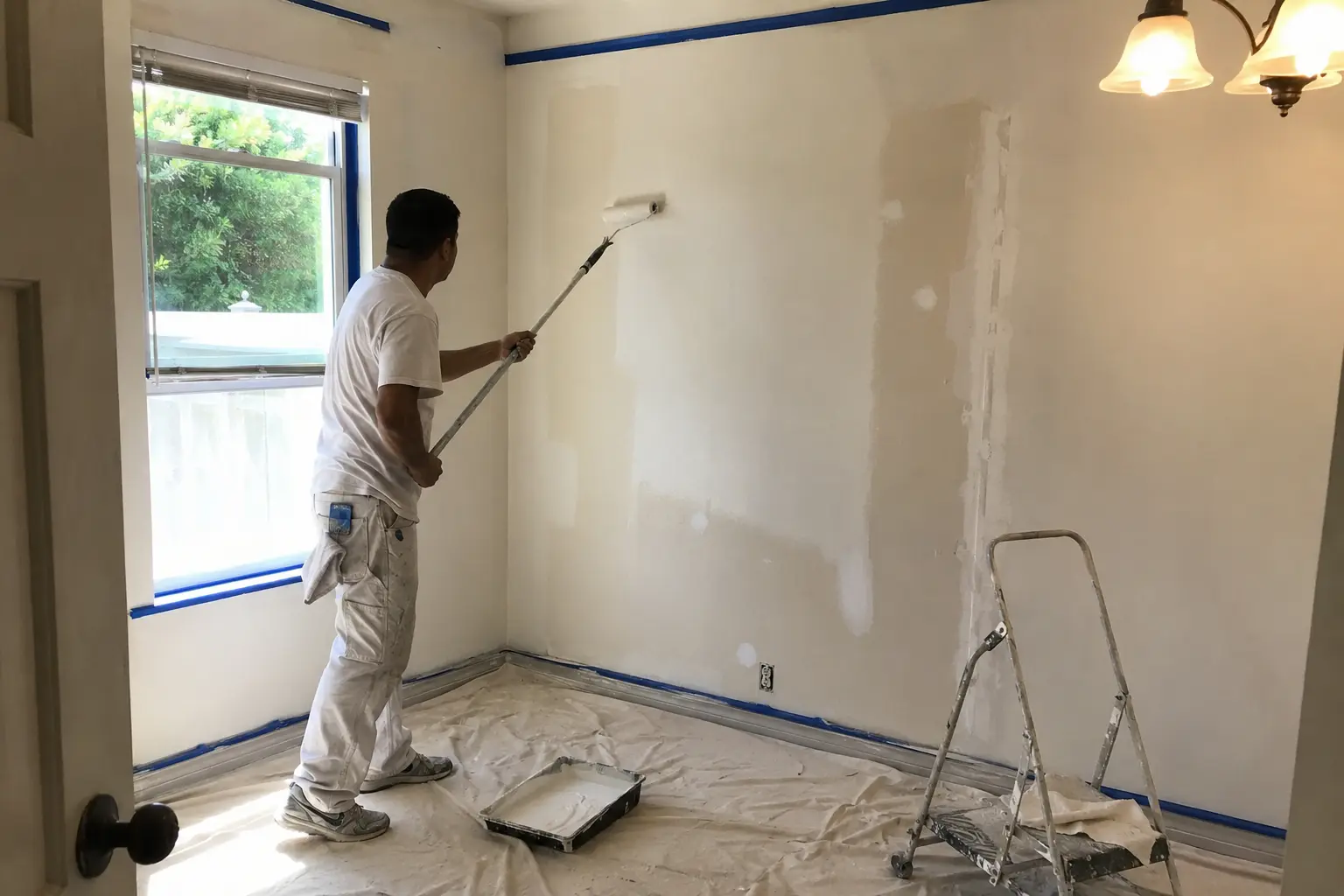
- Walls-only painting and a full repaint that includes ceilings, trim, closets and doors are different scopes.
- Surface repair, color changes, occupancy, height and protection usually affect labor more than the price of paint alone.
- Painting is generally finish work exempt from a building permit, but related repairs, systems work and pre-1978 lead-safe requirements must be evaluated separately.
A realistic Los Angeles planning range
For early screening, plan roughly $3 to $8 or more per square foot of floor area for professional interior painting in Los Angeles. A vacant walls-only refresh with sound surfaces, one light color and limited patching may fall near the lower portion. Walls, ceilings, baseboards, casings, doors, closets, major color changes, tall areas or extensive repairs move the work upward and can exceed the range.
Floor-area pricing is only a shortcut. Contractors may instead price paintable surface, room, labor day or a measured fixed scope. A 1,000-square-foot apartment with many doors and damaged plaster can require more work than a larger open-plan unit. Final pricing needs photos, measurements and a clear finish schedule.
What an interior painting estimate should include
Two totals are comparable only when they cover the same surfaces and preparation. A low walls-only quote should not be compared directly with a quote that includes ceilings, trim, doors, premium coatings and damaged-surface restoration.
- Surfaces: walls, ceilings, baseboards, window and door casings, doors, closets, shelving and cabinets listed separately.
- Preparation: protection, cleaning, loose-paint removal, patching, sanding, caulking, spot priming and stain blocking.
- Paint system: manufacturer or allowance, product line, color count, sheen, primer conditions and finish-coat expectation.
- Site conditions: vacant or occupied, furniture moving, floor protection, ceiling height, stair access, parking and building work hours.
- Closeout: daily cleanup, debris removal, labeled touch-up paint and a final walkthrough.
- Exclusions: water-source repair, mold or hazardous-material work, major plaster or drywall replacement, cabinet refinishing and work behind fixed contents unless specifically included.
The conditions that change price most
Labor increases when crews must remove peeling coatings, repair cracks, skim rough walls, block water or smoke stains, protect occupied rooms or cut sharp transitions between several colors. Dark-to-light changes may need additional primer or coats. High ceilings, stairwells and detailed trim also slow production.
Vacant apartments are usually more efficient because furniture movement and daily reset are limited. Condos may add elevator reservations, parking, common-area protection, restricted hours and management rules. A detached home may have easier access but more doors, closets, trim and varied rooms. These are estimating differences, not reasons to leave the scope vague.
Permit, contract and lead-safe considerations
The California Building Code lists painting, papering and similar finish work among work exempt from a building permit. That exemption does not authorize electrical, plumbing, structural or other regulated work bundled into the project, and a local building department may need to confirm a mixed scope. Condo or property-management approval can still apply even when a city permit does not.
California's CSLB states that a written home-improvement contract is required when combined labor and materials exceed $500, and changes should be documented in writing. A permit exemption is not an exemption from licensing, contract or consumer-protection requirements.
For housing and child-occupied facilities built before 1978, EPA's Renovation, Repair and Painting rule can apply when paid work disturbs painted surfaces. Sanding, scraping and repair may trigger lead-safe certification and work-practice requirements; a simple age assumption or a new finish coat should not replace project-specific review.
Control cost without cutting necessary preparation
The safest savings come from reducing agreed scope or simplifying selections. Skipping adhesion problems, active moisture, stain blocking or necessary surface preparation can create peeling, flashing and callbacks rather than real value.
- Prioritize the rooms and surfaces that need a full repaint; use touch-up only where the existing color and sheen can be matched acceptably.
- Use one coordinated wall color and a limited sheen schedule to reduce masking, transitions and leftover material.
- Complete leak repairs and allow affected surfaces to dry before patching or coating.
- Move personal items and approve colors before mobilization; keep work areas available to the crew.
- Separate optional closets, ceilings, doors or premium coatings as written alternates instead of quietly removing preparation from the base scope.
Send photos for a scope-based painting estimate
Planning interior painting in Los Angeles, Hollywood, West Hollywood, Glendale, Fullerton or Orange County? Send the property address, approximate floor area, occupancy status, room photos, desired surfaces and target timing through Request an Estimate. Archéform can identify whether photos are enough for the next pricing step or whether a walkthrough and measurements are needed.
- One wide photo of every room plus close-ups of peeling, cracking, stains and previous patches.
- List walls, ceilings, trim, doors, closets and cabinets as included or excluded.
- Current and desired colors, sheen preferences and any required paint brand or building standard.
- Construction year if known, elevator or parking rules, occupied areas and the desired completion window.
Planning ranges are general starting points, not a bid or guarantee. A written proposal requires review of the property, final scope, selected materials, access, jurisdiction and applicable approvals.