
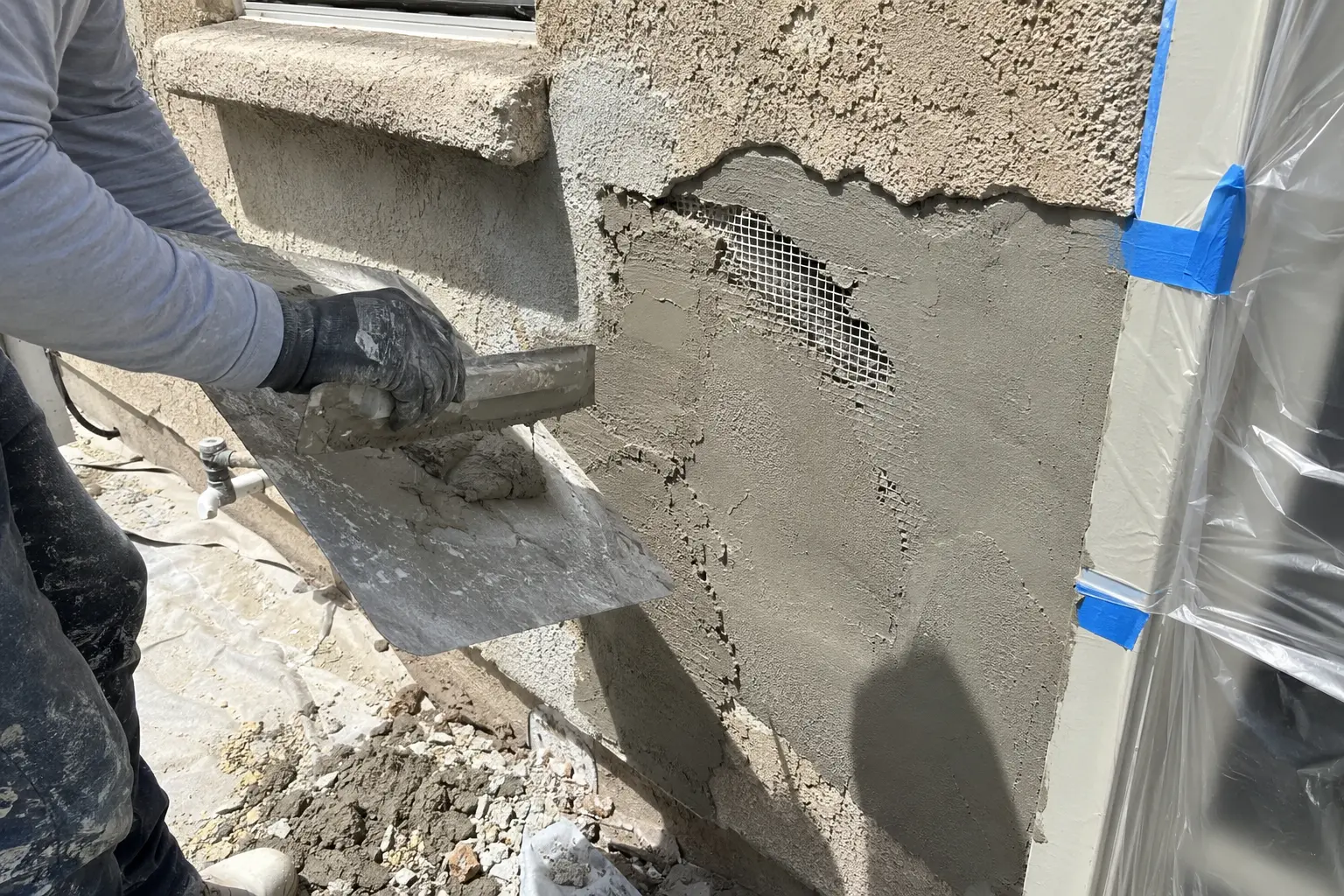
- A small accessible surface repair may begin around $1,500–$4,500; deeper or multi-area work involving lath, weather barrier and texture matching can reach $4,500–$12,000 or more.
- Large elevations, scaffolding, widespread delamination, sheathing damage or full repainting can move a project above $12,000–$25,000.
- LADBS guidance distinguishes surface patching, sealing or painting from stucco removal that exposes framing or installs new plywood; the complete scope should be confirmed before relying on a permit exemption.
Realistic 2026 stucco repair planning ranges
For early planning in Los Angeles, a limited, accessible surface crack or patch may begin around $1,500 to $4,500. Several repair areas or a deeper opening that requires weather-resistive paper, lath, base coats and texture matching may plan around $4,500 to $12,000 or more. Multiple elevations, difficult access, widespread hollow or loose stucco, sheathing repair and full exterior repainting can reach $12,000 to $25,000 or more.
These ranges are screening numbers, not bids. Square footage alone does not capture mobilization, protection, scaffold or lift access, demolition depth, drying time, texture blending and paint break points. Final pricing requires elevation photos, close-ups, approximate dimensions and confirmation that the moisture source has been corrected.
What a complete stucco proposal should define
A low price for crack filler and touch-up paint is not comparable to a proposal that opens failed material, restores the drainage layers, applies a multi-coat repair and paints to natural break points. Compare the same repair depth and finish limits.
- Every repair location, approximate dimensions and whether the quoted area is surface-only or opened to sound edges.
- Protection for windows, roofing, paving, landscaping, occupants and pedestrian paths.
- Removal depth and the assumed condition of sheathing, framing, flashing, weather-resistive barrier and lath.
- Compatible patch system, number of coats, curing time, texture sample and reasonable limits of color or texture matching.
- Primer and paint limits: spot finish, corner-to-corner wall finish or broader exterior repaint.
- Access equipment, cleanup, hauling, daily protection and final walkthrough.
- Permit responsibility and a written change-order process for concealed damage discovered after opening.
Surface crack, deep repair or water-intrusion repair?
Hairline shrinkage cracks and small stable surface defects may be suitable for cleaning, compatible patching, sealing and coating. Repeated diagonal cracks, bulging, hollow areas, staining below windows or repairs that keep reopening need more investigation before a cosmetic patch is priced.
When removal exposes building paper, lath, plywood or framing, the work becomes a wall-assembly repair. Window and door flashing, roof-to-wall transitions, decks, parapets, plumbing penetrations and failed sealant can be the actual moisture source. Stucco should not be closed until the source and any wet or damaged substrate are addressed.
A visual estimate cannot guarantee concealed conditions. The proposal should state an included opening or repair assumption, then use photographs and a signed change order if hidden sheathing, framing, corrosion, mold-related clearance or a larger failure is found.
Los Angeles permits, inspections and older paint
Los Angeles Department of Building and Safety guidance lists surface stucco patching, sealing and painting as an exception, while new stucco installation or removal and replacement that exposes framing, and work involving new plywood, requires permit review. Structural repair, altered openings and other connected work also require separate review. Confirm the actual address and full scope with DBS before construction.
When a permit is required, inspections follow the approved scope and should be scheduled before covered work is concealed. HOA or property-management approval remains separate from city permitting and may add insurance, work-hour, access and color requirements.
For pre-1978 housing and child-occupied facilities, paid renovation that disturbs painted surfaces can fall under EPA Renovation, Repair and Painting requirements. The project team should confirm building age, affected surface area and lead-safe obligations before sanding, demolition or coating removal.
Control cost without hiding the cause
The safest savings come from a defined opening, efficient access and clear finish boundaries. Covering an active leak or unstable substrate usually turns the same cost into another repair.
- Repair the roof, flashing, plumbing or sealant source before closing and painting the stucco.
- Bundle nearby repair areas into one mobilization when access and coating systems are the same.
- Use corners, control joints, trim lines or full wall planes as paint break points to reduce visible patchwork.
- Provide clear access and decide landscaping, parking, resident notice and work hours before mobilization.
- Use a defined allowance or signed change order for concealed sheathing and framing damage instead of padding every bid for the worst case.
- Choose a compatible texture and coating system based on the existing wall rather than appearance alone.
Send stucco photos for an estimate review
Planning stucco crack, water-damage or exterior wall repair in Los Angeles, Hollywood, West Hollywood, Glendale or nearby areas? Send the property city, wide elevation photos, close-ups and approximate dimensions. Archéform can explain whether an initial range is possible from photos or a site review is needed.
- One wide photo of each affected wall plus close-ups of cracks, bulges, stains, windows, doors and roof transitions.
- Approximate width and height of each area and the number of stories.
- When the damage appeared, whether it changes after rain and whether the water source was repaired.
- Building year, HOA or property-management rules, occupied status and access limitations.
- Whether the request includes stucco only, localized paint, full wall painting or full exterior painting.
Planning ranges are general starting points, not a bid or guarantee. A written proposal requires review of the property, final scope, selected materials, access, jurisdiction and applicable approvals.